
As a nonprofit made up of what’s mostly artists and culture aficionados, you might not think that we’re the biggest group of science nerds – but that’s where you’d be wrong! We’re always stoked when we get to combine science with the arts – it happens more than you might think.
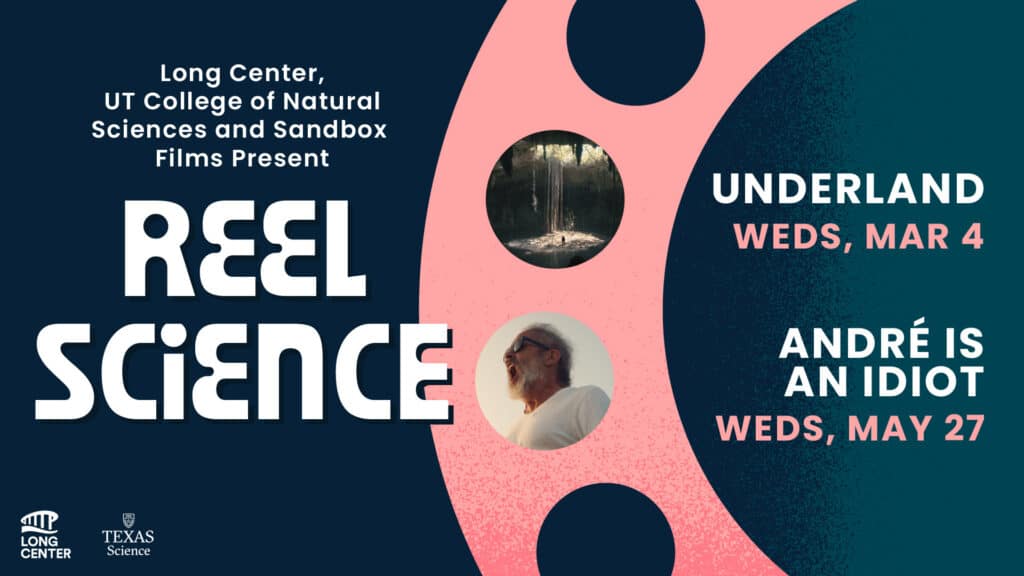
From regular visits from legends like Neil deGrasse Tyson (catch him on April 14!) to our once in a lifetime events like the 2024 Total Eclipse Viewing Party, we love getting the chance to learn more about all things science. Which is why one of our favorite events these days is Reel Science. This is our documentary film series in partnership with UT College of Natural Sciences that brings you a documentary screening plus a Q&A with real scientists covering topics ranging from meteors to moths to our very own DNA.
Now that this series is back for the spring, we thought it would be a good time to have a chat with Christine Sinatra, UT College of Natural Science’s Director of Communications, and Melissa Kemp, PhD, Associate Professor in the Department of Integrative Biology. Read on to learn more about this series and get a peek at what to expect at our screening of Underland followed by a Q&A with Dr. Kemp on March 4!
Welcome to Mid-Week Intermission, Melissa and Christine! We usually like to ask folks for a song to go with their interview – anything come to mind?
MELISSA & CHRISTINE: Men at Work’s “Down Under” seems appropriate.
Reel Science is a series the Long Center and UT have been collaborating on for a few seasons now, covering all sorts of areas in science. Christine, what do you think is the coolest thing about this series?
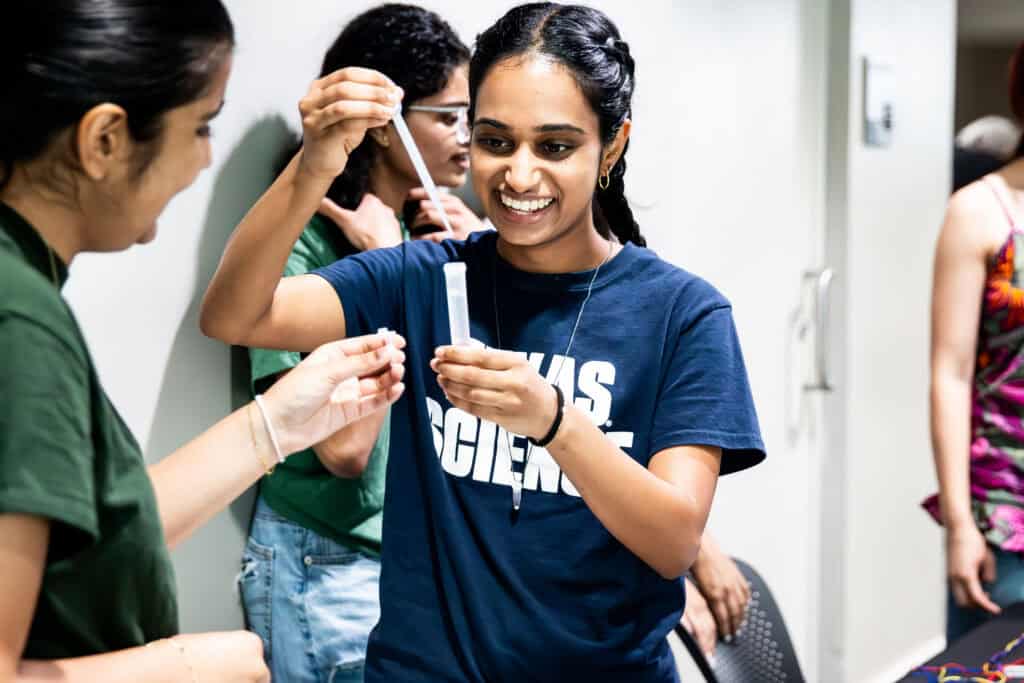
CHRISTINE: With this series, each time, we have three components. There’s always a beautiful documentary about something science-themed. There’s a chance for audiences to meet and hear from a working scientist. And there’s a hands-on experience for participants to engage with the science themselves in some way. The coolest thing is to see people’s excitement. Folks of all ages at these events tap into an innate curiosity about science. While most of us may associate that kind of wonder with childhood, with some of these topics it really is fascinating at every stage of life.
Can you share how and why this series and partnership came to be?
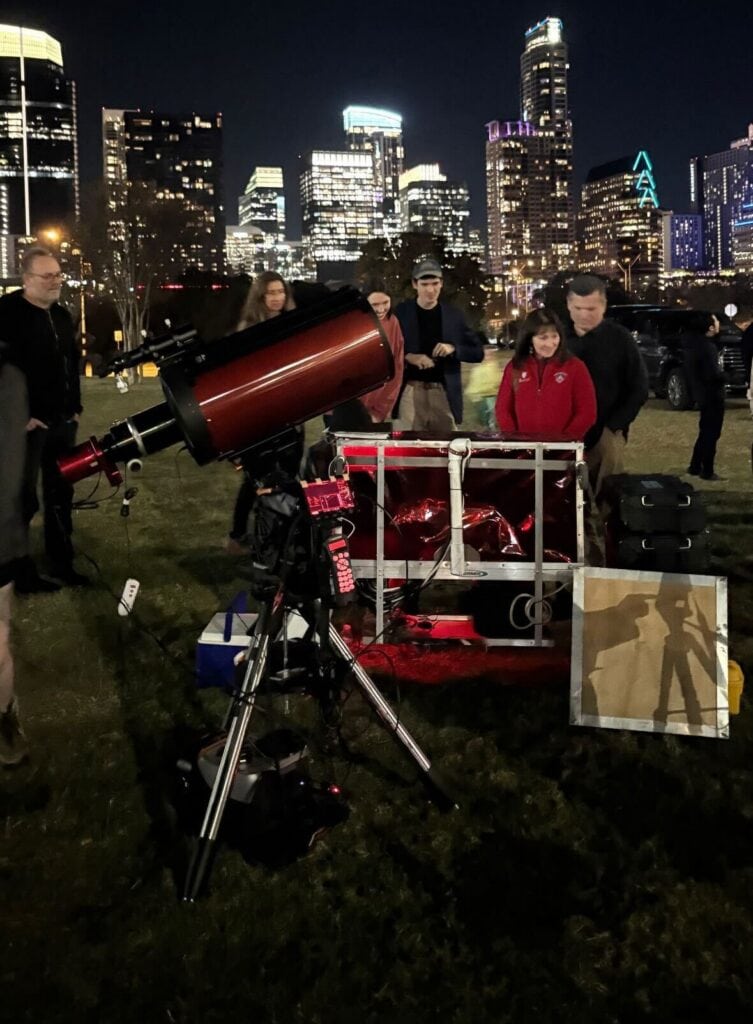
CHRISTINE: The total eclipse that passed over Austin two years ago sparked the partnership initially. Here was a fantastic moment, when everyone in the community was focused on a phenomenon in the natural world and coming together to learn and be a part of the action. We were delighted when our McDonald Observatory, with support from the Simons Foundation, got to join the Long Center’s big eclipse party, having on site that day a replica of UT’s big Hobby-Eberly Telescope.
Later on, staff in the college and at the Long Center put their heads together about how we could find ways to bring more experiences like that to Austin, essentially where folks could celebrate the often awe-inspiring nature of scientific phenomena in ways that are accessible and in community with other people. It turns out the Simons Foundation also supports an editorially independent subsidiary called Sandbox Films, which produces lots of award-winning documentary feature films, and all of them spotlight the beauty of scientific inquiry in some way. We have teamed up for more than a half dozen Reel Science events, and each time, there is a UT scientist who’s a passionate and excellent communicator, taking questions from the audience: whether about deep-sea exploration, black holes, the latest gene-editing technology or, as is the case with our next segment, science under the ground.
So, Melissa, paleobiology – can you share a little bit about what this really means and your area of research for all of us non-scientists?
MELISSA: Paleobiology is the study of ancient life. We use fossils (the preserved remains or traces of ancient organisms) to understand how and when organisms diversified; determine what caused mass extinction events and how organisms recovered afterwards; reconstruct ancient ecosystems, and more. Importantly, paleobiology allows us to relate ancient organisms to present-day biodiversity, providing valuable insight into how life responds to environmental change.
My research capitalizes on that last theme: using the past to understand the present. We excavate and describe fossils from cave sites across the Americas with the goal of understanding why some species go extinct whereas others persist or even thrive when the environment changes. As environments continue to change rapidly, paleobiology provides important insights into how species will weather present and future environmental changes.
What did your journey to becoming a scientist look like?
MELISSA: I didn’t seriously entertain the idea of becoming a scientist until I was a sophomore or junior in high school. I loved being outdoors, reading National Geographic, and watching science documentaries, but my passion was the visual arts. Throughout middle school and high school I studied at intensive art magnet schools and most of my classmates went to art school for college, so I thought that I was headed down that path as well. But I always had an interest in the environment, the past, and how we have gotten to where we are today (both as a society and in terms of earth’s biodiversity). At some point it became clear to me that while I loved to observe the world and recreate it through art, I was really fascinated by the mechanisms underlying the changes I observed, and painting or drawing was not going to provide satisfying answers to my questions.
As an undergraduate at a small liberal arts college, I threw myself into the sciences, taking courses in the geosciences, chemistry, anthropology, and biology before deciding to major in biology. What truly hooked me was the lab and field-based research experiences that I was fortunate to participate in: experiences like excavating George Washington’s childhood home in Virginia, dating early hominid sites from Europe, studying the genetics of coral reef fishes in Indonesia, identifying ancient coral reefs in Mexico.
I loved being in the field and the lab so with encouragement from mentors, I decided to pursue a PhD. My journey from an undergraduate biology major to an associate professor of Integrative Biology was what you might describe as linear, in that I didn’t take breaks in between degrees to pursue other interests. My desire to become a professor at a research-intensive university like UT was solidified during my PhD years, as I felt that such an institution would allow me to pursue research, teaching, and service freely and in ways that aligned with my values.
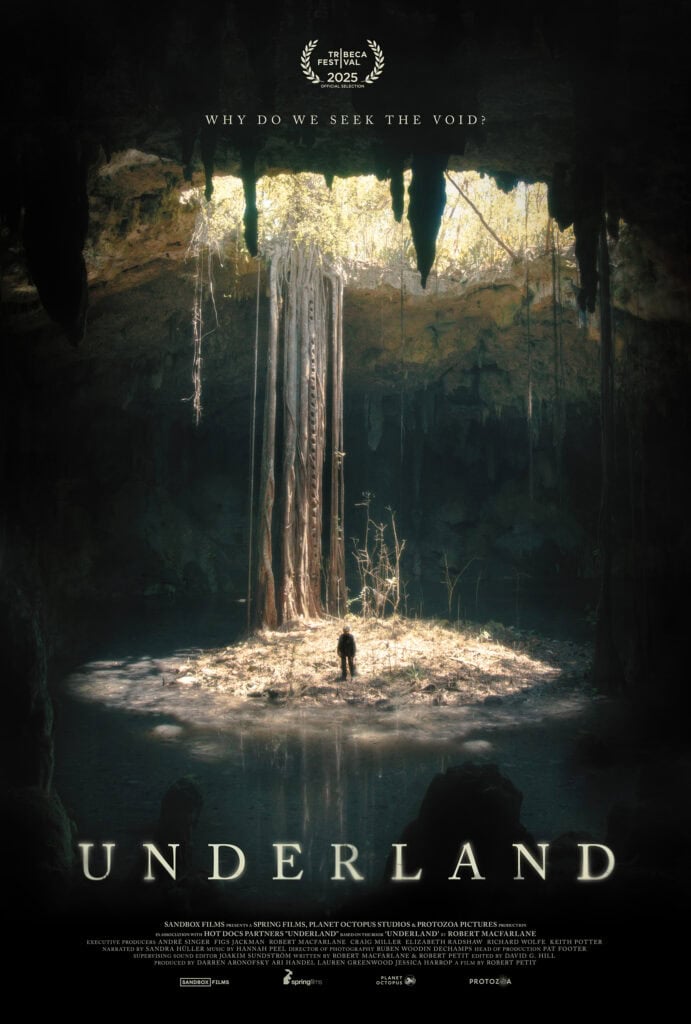
Underland, our next Reel Science film, explores the hidden worlds beneath Earth’s surface. What kinds of questions can folks expect to have answered by this documentary?
MELISSA: Many people have never seen the underground environments explored in Underland; in fact, some may view them with trepidation. One of the fundamental questions answered by the film, then, is what do these environments look like, and Underland answers this question with stunning visuals. It also encourages introspection about deep time, the persistence of life, and our responsibility as stewards of the environment. I think people will leave with some questions about what’s hidden beneath Earth’s surface answered, but I hope that it encourages us to ask more questions about the unknown and often unseen.
What’s something you would say to encourage people who might be curious about exploring more in the realm of science?
CHRISTINE: We hope you will! A lot of people have stereotypes in their minds about who gets to do science, but what folks get to see with Reel Science – both from the scientists in the films and from the ones taking questions live on site – is that scientists come from every different background imaginable. They are simply people with an inherent wonder about the world and a determination to get to know some aspect of that world a bit better. What’s inspiring is that this part of science is something truly any of us can tap into. We can attend public science events like these. We can go to places in Austin like the Wildflower Center and Texas Science & Natural History Museum and be immersed in it. We can volunteer and take part in citizen science projects. We can read, learn and guide our children to do those things, too, and help keep a flame of scientific inquiry alive. That flame doesn’t belong only in labs and at field sites. It belongs throughout our communities and all of society, advancing the human enterprise for generations.
MELISSA: It’s never too early or too late to explore more in the realm of science! Curiosity propels science, and humans are naturally curious, using principles of scientific inquiry on a regular basis. In a way we are all scientists, and it is empowering to have this realization. Swapping out ingredients in a cake recipe to see if you can improve its texture? Trying out a new fertilizer in your garden to see if you can increase produce yield? Those are all experiments that anyone could do, and they don’t require lab space or expensive equipment.
In Austin, we are fortunate to have many opportunities to engage with practicing scientists through the University of Texas at Austin, as Christine mentioned. You can also engage with community-based organizations like local paleontology societies. The internet opens up many doors as well. There are a plethora of online forums, videos, articles, and other resources available to learn about the scientific topics interest you most!
Is there anything else you want to share about the screening of Underland in the Rollins Theatre on March 4?
CHRISTINE: This event is part of the 2026 Texas Science Festival, which has dozens of events happening, including at the intersection of art and science, from February 18-March 5. Just like at our other Reel Science events, you will get to see a great film, meet people doing fascinating research and try out some demos. On top of that and since it is also a part of the festival, there will be giveaways and a game, where you can play to win prizes, even including a three-night stay out at the McDonald Observatory in Fort Davis. It’s fun on top of the usual fun, and we can’t wait to see everyone there.
Thanks, Melissa and Christine!
Join us for our next Reel Science event on March 4 screening Underland and a Q&A with Melissa, and get to know your inner nerdy scientist. 🤓
At the Long Center, we’ve always got a new partnership or something cool we know you’ll want to check out! Find and follow us @longcenter on your social media platform of choice, and we’ll see you real soon.
We all know Austin is nothing without its people – and some of the very best ones are the organizations doing the work that keeps our city creative, connected, and thriving. At the Long Center, we’re lucky to team up with a whole crew of local nonprofits and community organizations who bring their energy to our shows, our lobbies, and our outdoor spaces to share a bit about their cool, meaningful work.
So, in this new series we’re calling our Community Partners Roundup, we wanted to start formally introducing you to a few of our community partners you might’ve seen around the venue sharing resources, creating conversations (and sometimes handing out cool swag), and working hard to make Austin a better place to live.
Read on to meet some of the organizations helping make the LC (and Austin) feel like home! 👇 And stay tuned for more installments of the Community Partners Roundup. 🤠
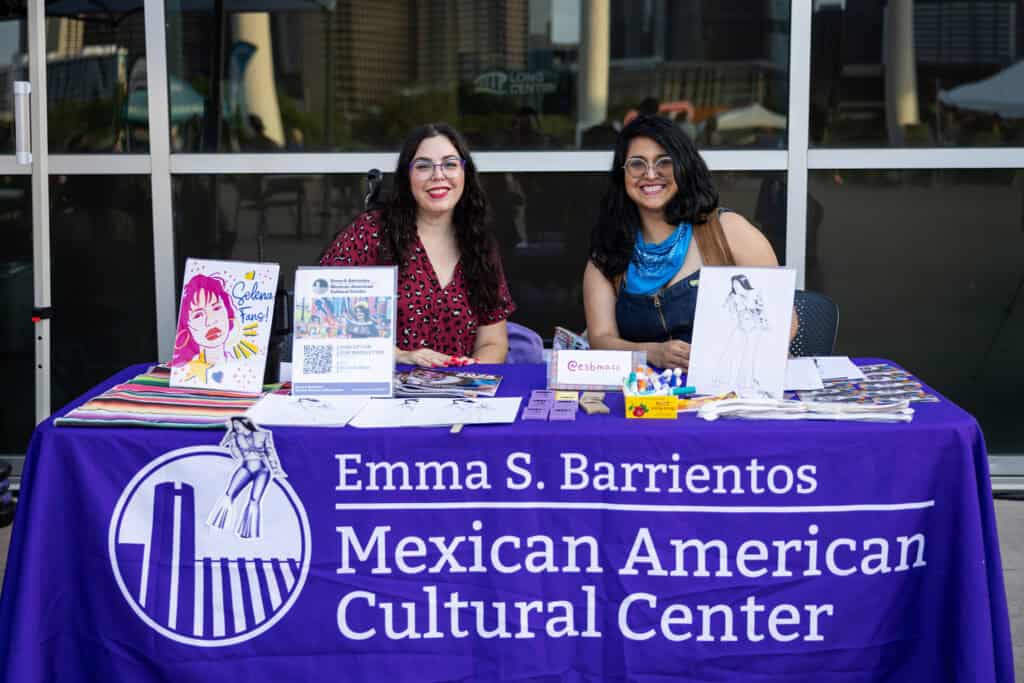
WHO: Emma S. Barrientos Mexican American Cultural Center
WHAT: The Emma S. Barrientos Mexican American Cultural Center (MACC) is dedicated to the preservation, creation, presentation, and promotion of the cultural arts of Mexican Americans and Latino cultures.
The MACC hosts events celebrating Latino arts, working with local organizations and artists across all disciplines that provide cultural programming to the Austin community. They also provide a variety of cultural arts classes and camps for folks of all ages (from adults to kiddos), and the center hosts two art galleries (which will reopen this Spring, following renovations) highlighting local, regional and national Latino/a artists.
WHERE: The MACC is located in the Rainey Street District at 600 River St., though the center is currently closed for remodeling. In the meantime, you can find the MACC events across town by visiting their website, and check them out when they come to visit the Long Center at our Hispanic Heritage and community events!
WHY WE LOVE ‘EM: The MACC offers so many opportunities to engage with and celebrate Latino art and they’re one of Austin’s most longstanding pillars of cultural community.
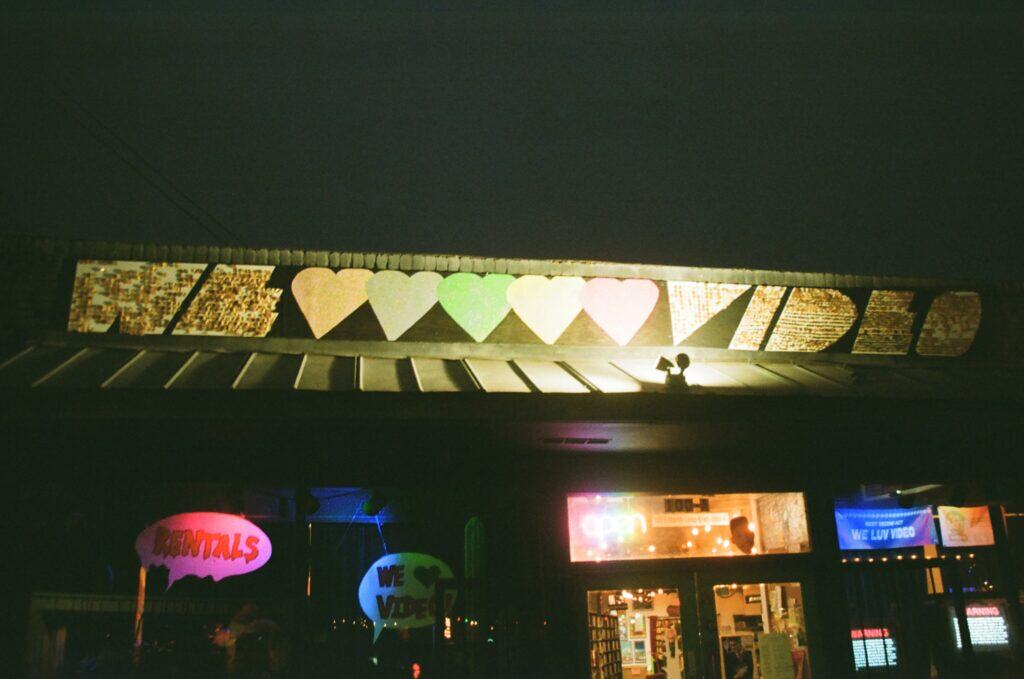
WHO: We Luv Video
WHAT: We Luv Video is a nonprofit old-school video store, dedicated to preserving and sharing all sorts of physical media, from the rare to the weird to the essential. Members can rent DVDs, Blu-Rays, and VHS tapes from their extensive collection.
The volunteer-run shop also has a microcinema in the back which hosts screenings of niche cinema and locally produced short films. The space serves as a cultural center for all lovers of movies and television.
WHERE: You can visit the store on the North Loop strip, located at 100 E. North Loop Blvd, and check them out at the Long Center when they join us for our special film screenings and movie-based events!
WHY WE LOVE ‘EM: Video rentals is a lost art, and the band of movie nerds that is We Luv Video is out there fighting the good fight in trying to preserve it. We couldn’t be more grateful.
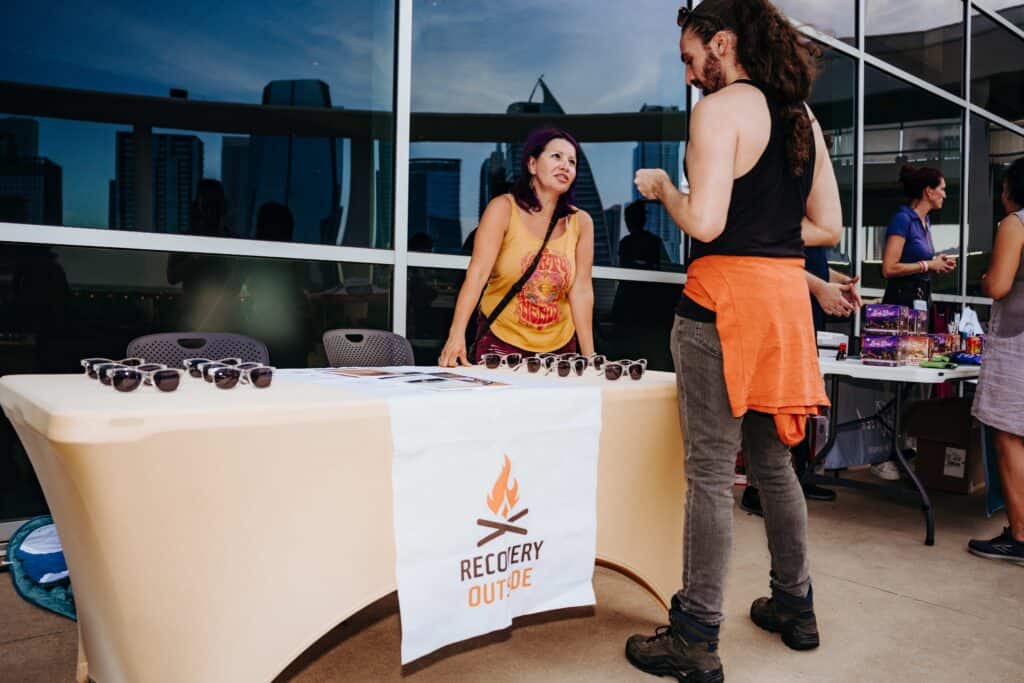
WHO: Recovery Outside
WHAT: Recovery Outside is a nonprofit offering outdoor experiences that build community, promote healing, and support long-term recovery from addiction and mental health challenges.
Founded this past summer, Recovery Outside hosts all kinds of activities including rock climbing, paddleboarding & kayaking, sand volleyball, pickleball & tennis, hiking and archery – all with a focus on connecting people with the outdoors, their community, and their own personal growth.
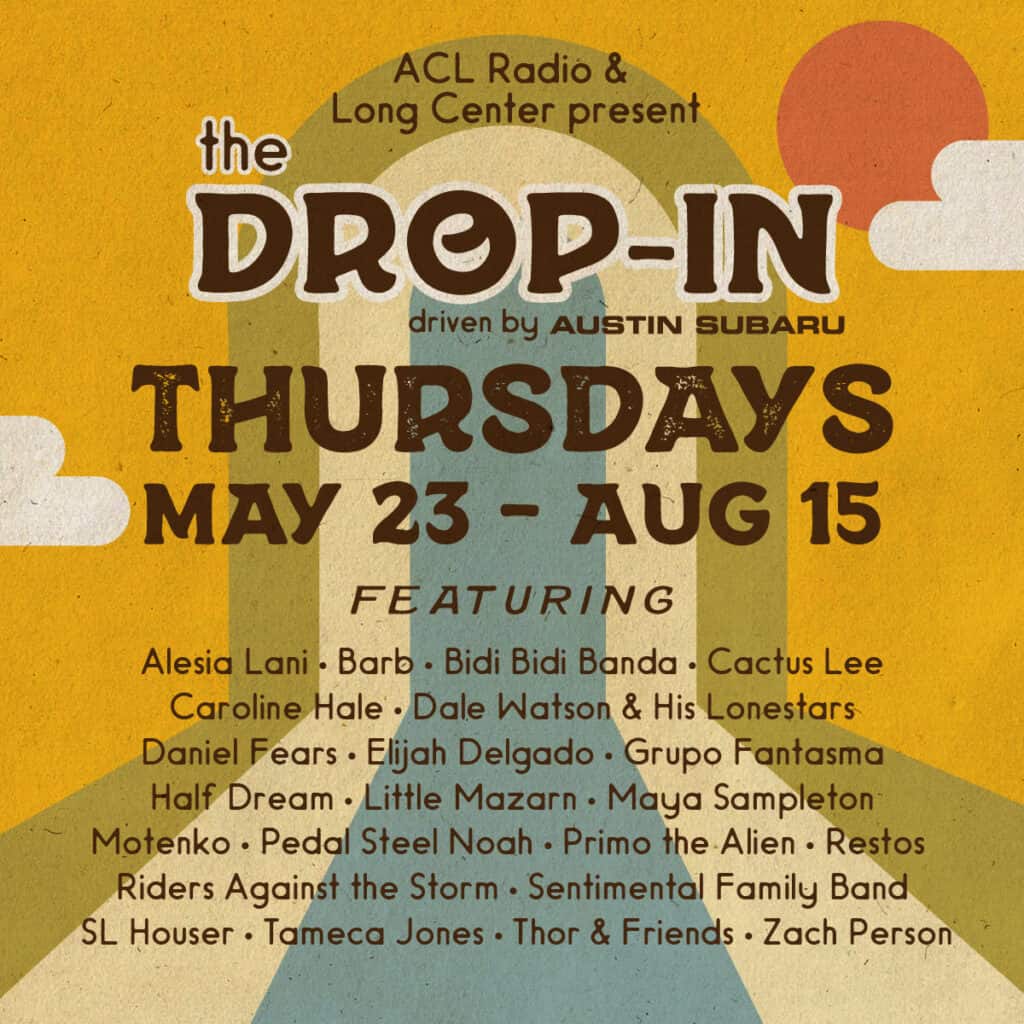
WHERE: You can find Recovery Outside events by following them on social media and Sweatpals to check out their upcoming events, and chat with them when they join us at The Drop-In!
WHY WE LOVE ‘EM: We’re big fans of anything that gets folks up and moving, and combine that with a mission focused on wellbeing and recovery? That just makes our hearts soar.
Thanks for tuning in to our Community Partners Roundup! Go check these guys out, follow them on social media, and be sure to say hi the next time you see them hanging out at the LC! 😉
At the Long Center, we’ve always got a new partnership or something cool we know you’ll want to check out! Find and follow us @longcenter on your social media platform of choice, and we’ll see you real soon.